
Recipes & Ingredients
Outfitters
Meal & Menu Planning
Group Camping Breakfast Recipes You Can Make Ahead
Wholesum Team
·

Breakfast sets the tone for a trip day. Get it wrong and you launch late, with a cold crew and a stack of greasy pans. These group camping breakfast recipes are built to be prepped at home or at base, so the morning in camp is mostly heating, scooping and a quick cleanup.
Below are six make-ahead breakfasts that hold up on river trips, base camps and long weekends with a big group. We’ve added tips for scaling them, keeping them safe in a cooler, and turning them into a shopping list you can hand to whoever is doing the buying.
Why make-ahead breakfasts work for big groups
Camp mornings are short on everything: daylight, warm hands, stove space and patience. Doing the chopping, mixing and baking ahead moves the slow work to a real kitchen with counters and running water. It also cuts down what you haul in. Leave No Trace’s Plan Ahead and Prepare principle recommends repackaging food to minimize waste, and pre-portioned breakfasts are an easy place to start.
Make-ahead also means fewer decisions at 6 am. If a bag says “Day 3 breakfast” and holds everything for Day 3 breakfast, anyone on the crew can get it going.
Six make-ahead group camping breakfast recipes
1. Freezer breakfast burritos
Scramble eggs, brown some potatoes or sausage, add cheese and salsa, roll everything in tortillas and wrap each burrito in foil. Freeze them flat. In the cooler they double as extra ice for the first day or two. In camp, set the foil packs on a griddle or in a warm Dutch oven and turn them until they’re hot all the way through.
Bring a probe thermometer. FoodSafety.gov lists 165°F as the safe temperature for reheated leftovers, and a burrito can feel hot on the outside while the middle is still cold. Wrap a few without meat or cheese before freezing, mark the foil, and your vegetarian and dairy-free options are already sorted.

2. Baked egg casserole or strata
Layer bread, eggs, milk, cheese and vegetables in hotel pans, bake at base, then chill and cut into squares. Cook it all the way before you leave. FoodSafety.gov puts egg dishes like frittata and quiche at 160°F, and casseroles that contain meat at 165°F. In camp, reheat the squares on a griddle with a lid or a sheet of foil over them.
Cool big batches fast. USDA’s Food Safety and Inspection Service recommends dividing large amounts of food into shallow containers so they chill quickly, and it says cooked leftovers keep 3 to 4 days in the refrigerator. Schedule casseroles for the first few mornings of a trip, not the last.
3. Overnight oats by the bucket
Bag rolled oats, chia seeds, dried fruit, cinnamon and powdered milk at home, one bag per morning. The night before, stir in water in a lidded pot or food-grade bucket and keep it cool overnight. In the morning it’s ready to scoop, with no stove required. Set out nut butter, honey and fresh fruit so people can build their own bowls, and keep the nut butter on its own spoon if anyone in the group has a nut allergy.

4. Big-batch granola
Granola is about the most forgiving make-ahead breakfast there is. Bake several sheet pans in the off-season, store it airtight, and serve it with yogurt early in the trip and powdered milk later on. It also makes a good backup for mornings when weather or an early launch means nobody wants to light a stove. If you need a nut-free option, bake that batch first and bag it separately.
5. Pancake kits
Measure the dry ingredients for each pancake breakfast at home and bag them with the day and meal written on the outside. In camp, the cook adds the wet ingredients and starts flipping. One large griddle beats two small pans for a group, and pre-measured kits keep the flour in the bag instead of all over the table. Pack a bag of berries or chocolate chips with each kit and it feels like a treat.
6. Par-cooked breakfast hash
Dice and par-boil potatoes, sauté onions and peppers, cool everything quickly and freeze it flat in bags. In camp it only needs time on a hot griddle to crisp up. Add eggs, black beans or crumbled sausage and you have a full breakfast from one pan, which also means one pan to wash.
Scaling breakfast recipes for a group
The math is where make-ahead breakfasts usually go sideways. A casserole that feeds eight at home doesn’t simply become “five times that” for 40 people when your pans, coolers and stoves all have limits.
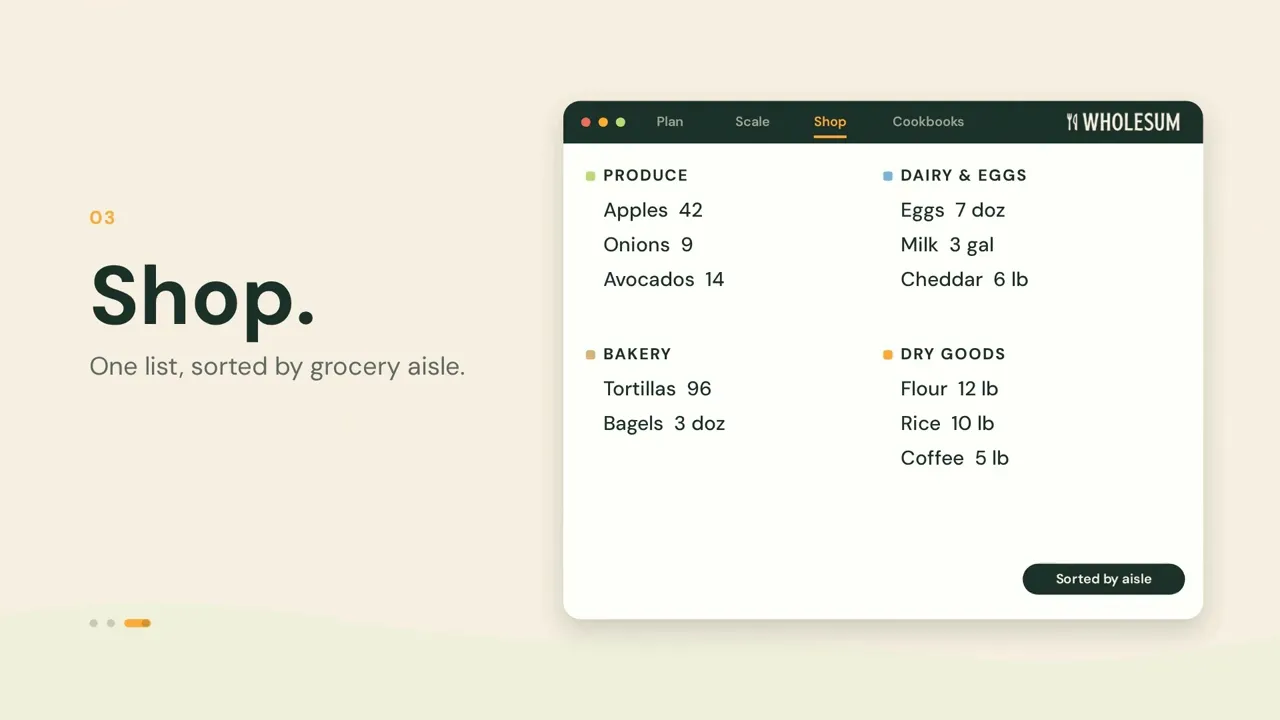
In Wholesum, every recipe scales to the headcount on the trip, so a breakfast written for 8 recalculates for 23 or 80 without anyone doing fractions on the back of a receipt. The shopping list converts ingredients to purchasing units and sorts them by store department, so a pile of individual eggs becomes dozens you can actually buy. We go deeper on this in How to Scale a Trip Menu From 8 to 80 Without Starting Over.
Scale by the pan, not just the person. Know how many hotel pans or griddle loads you can cook at once, and plan breakfasts around that number.
Round up on the staples. Running short on eggs or tortillas at breakfast is hard to fix in the field.
Plan dietary versions as their own recipes. A gluten-free strata or vegan burrito is easier to track when it scales with its own headcount. Our guide to Handling Dietary Restrictions on Multi-Day Trips has more.
Put the prep on paper. A meal plan PDF with recipe cards lets the base crew prep breakfasts without calling the trip leader.
Keeping make-ahead breakfasts safe in the cooler
Prepared breakfasts are perishable, and they may spend days in a cooler. A few habits from USDA’s guide to packing a cooler to prevent food poisoning go a long way:
Pack perishable food straight from the fridge or freezer. Frozen items stay colder longer.
Keep the cooler full. Fill empty space with more ice.
Use a separate cooler for drinks so the food cooler gets opened less often.
Put an appliance thermometer in the food cooler and keep it at 40°F or below.
Get food back on ice within 2 hours, or within 1 hour when it’s above 90°F.
Plan the most perishable breakfasts, like casseroles and anything with dairy or meat, for the first days. Save shelf-stable options such as granola, oats and pancake kits for the back half of the trip. For longer trips, see How to Organize Food for a Multi-Week River Trip.
Find more breakfast ideas in the free Wholesum Cookbooks
Wholesum’s free public Cookbooks are a good place to round out a breakfast rotation. You can browse the Whitewater Rafting, Canoe Voyages and Backpacking Trips cookbooks without an account, or look through shared recipes from other Wholesum users. Paid accounts can import a cookbook into their own library, then scale it and plan with it like any other recipe. For more crowd-pleasing formats, try Six Build-Your-Own Meals That Feed Everyone.
Outdoor schools that plan this way notice the difference. As the team at L.L.Bean Outdoor Discovery School put it in their Wholesum story:
“Wholesum has streamlined our meal prep from beginning to end”
Here’s a short look at planning group meals in Wholesum:
Browse the free Cookbooks
Pick two or three breakfasts from this list, add a few tested recipes from the free Wholesum Cookbooks, and build them into next season’s standard menu. Your future self, standing over a griddle at 6 am, will thank you.
Photos via Unsplash.
Simplify your meal planning
Scale recipes to any headcount and get the shopping list in minutes. 14 days free, no credit card required.
Menu planning software for outfitters, camps, and group programs.
© 2026 Wholesum. All rights reserved.